Wheels, Wort, and Community: How Brewery Ride Clubs Are Rewriting the Taproom Experience
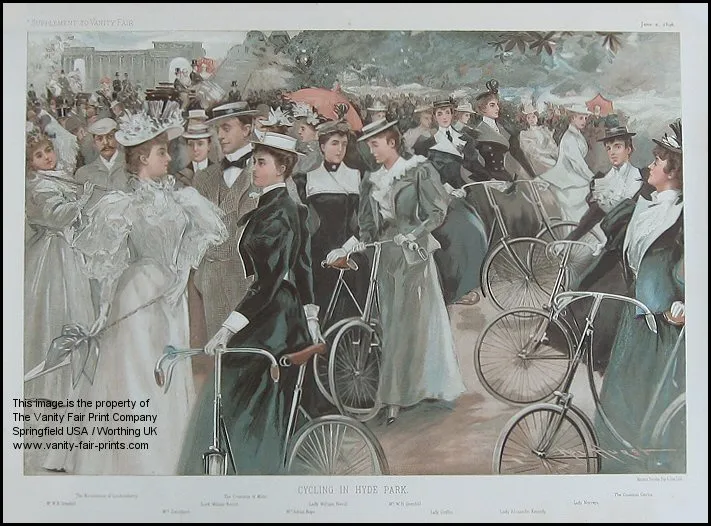
Photo: "Hal Hurst" (1865-1938), Public domain, via Wikimedia Commons
On a Tuesday evening in Asheville, North Carolina, about thirty cyclists roll into the parking lot of a small craft brewery, helmets still on, jerseys damp with effort. They're loud. They're laughing. A few of them are already debating the route for next week. Before anyone orders a beer, half the group is crowded around a trail map pinned to the taproom wall.
This isn't a one-off event. It happens every week. And it's happening in cities across America.
The brewery ride club — part social club, part athletic crew, part loyal customer base — has quietly become one of the most interesting developments in craft beer culture. These aren't just casual meetups. They're structured communities with regular schedules, route planners, skill-level divisions, and, increasingly, a sense of identity that members describe as closer to a team than a bar crowd.
Why the Brewery Makes the Perfect Home Base
Ask any ride club organizer why they chose a brewery as their anchor point, and you'll get some version of the same answer: it just makes sense.
Breweries tend to have parking lots. They're usually located near industrial or edge-of-city zones that connect naturally to trail systems or low-traffic roads. They have food. They have beer. And critically, they're willing to stay open late for a group that shows up sweaty and hungry at 7:30 on a weeknight.
Jamie Kowalski runs a weekly group ride out of a taproom in Madison, Wisconsin. He started it informally three years ago with a handful of friends and a shared Google Calendar invite. Now the ride draws between 40 and 80 people depending on the season, and the brewery has given the group its own dedicated corner of the taproom — a spot with a whiteboard for route notes and hooks on the wall for helmet storage.
"The brewery didn't ask us to do this," Jamie says. "We just kept showing up, and eventually they started making room for us. Now we're basically co-marketing each other."
That informal partnership is a recurring theme. Many brewery ride clubs start as grassroots efforts and evolve into something the brewery actively supports — hosting gear giveaways, sponsoring jerseys, even naming a seasonal beer after the group.
From Casual Spins to Competitive Culture
Not all brewery ride clubs look the same. That's part of what makes the format so durable.
Some groups run "no-drop" rides — a cycling term for rides where no one gets left behind, the pace is conversational, and the emphasis is on inclusion over performance. These tend to attract newer riders, commuters, and people who came for the beer and stayed for the biking. They're social in the truest sense: slow enough that you can actually talk, and structured enough that you leave with a new friend or two.
Other clubs skew more competitive. They run timed segments, track elevation, and organize weekend events that look more like unofficial gran fondos than taproom meetups. The beer is still central, but it's earned — a post-effort ritual rather than the main event.
Then there's the middle ground, which is probably where most clubs land. A moderate-pace group ride, 15 to 25 miles, mixed terrain, open to anyone who shows up with a functioning bike and a reasonable sense of adventure. Competitive enough to feel like a workout. Relaxed enough that a first-timer doesn't feel lost.
Maria Chen, who organizes a Thursday ride out of a craft brewery in Portland, Oregon, has watched her group evolve through all of these phases. "We started as a social ride," she says. "Then we got faster. Then some people felt left out. So now we run two groups simultaneously — a faster lead group and a more relaxed sweep group — and everyone meets back at the taproom at the same time."
The two-group model, she notes, has dramatically increased retention. People don't quit because the ride got too hard. They just find their lane.
What Brewery Owners Are Noticing
From the taproom side, the math on hosting a ride club is compelling.
A group of 40 cyclists who ride together weekly and then spend an hour at the bar is a different kind of customer than a random Tuesday night crowd. They come back. They bring friends. They post about it. They tell people where they ride.
Tom Reyes owns a small production brewery in Denver that started hosting a ride club about 18 months ago. He didn't expect much. "I thought it'd be like a dozen people, maybe," he says. "Now it's our highest-revenue Tuesday of the month, every single month."
Beyond revenue, Tom points to something harder to quantify: the ride club has given his brewery a personality. "People who've never been here know us as the brewery where the cyclists go. That identity is worth something. You can't buy that with advertising."
He's also noticed a shift in how long people stay. Traditional taproom customers often drink one or two beers and leave. The ride club crowd lingers. They're hungry. They're decompressing. They're recapping the ride. Average tab per person runs higher, and the energy in the room is different — more animated, more communal.
Building Something That Lasts
The clubs that stick around seem to share a few common traits. They have a consistent schedule — same day, same time, same starting point, every week. They have a clear communication channel, usually a group chat or a simple social media page where routes get posted in advance. And they have at least one person who genuinely cares about keeping the group welcoming to newcomers.
That last part matters more than people expect. Cycling culture has a reputation for being intimidating — the gear, the jargon, the unspoken pace hierarchies. Brewery ride clubs, at their best, push back against that. The taproom waiting at the end of the ride is a great equalizer. Nobody cares what your bike cost when you're both holding a cold IPA and talking about the hill that almost broke you.
For breweries looking to build something beyond foot traffic and seasonal promotions, the ride club model offers a genuinely different path. It's not about selling more beer in a vacuum. It's about becoming the place where something happens — where people show up week after week not because they have to, but because they actually want to be there.
That's a harder thing to build than a tap list. But judging by what's happening in taprooms from Madison to Portland to Denver, it might be the most valuable thing a brewery can cultivate.