Taps and Tires: Why Breweries and Bike Shops Are Moving In Together
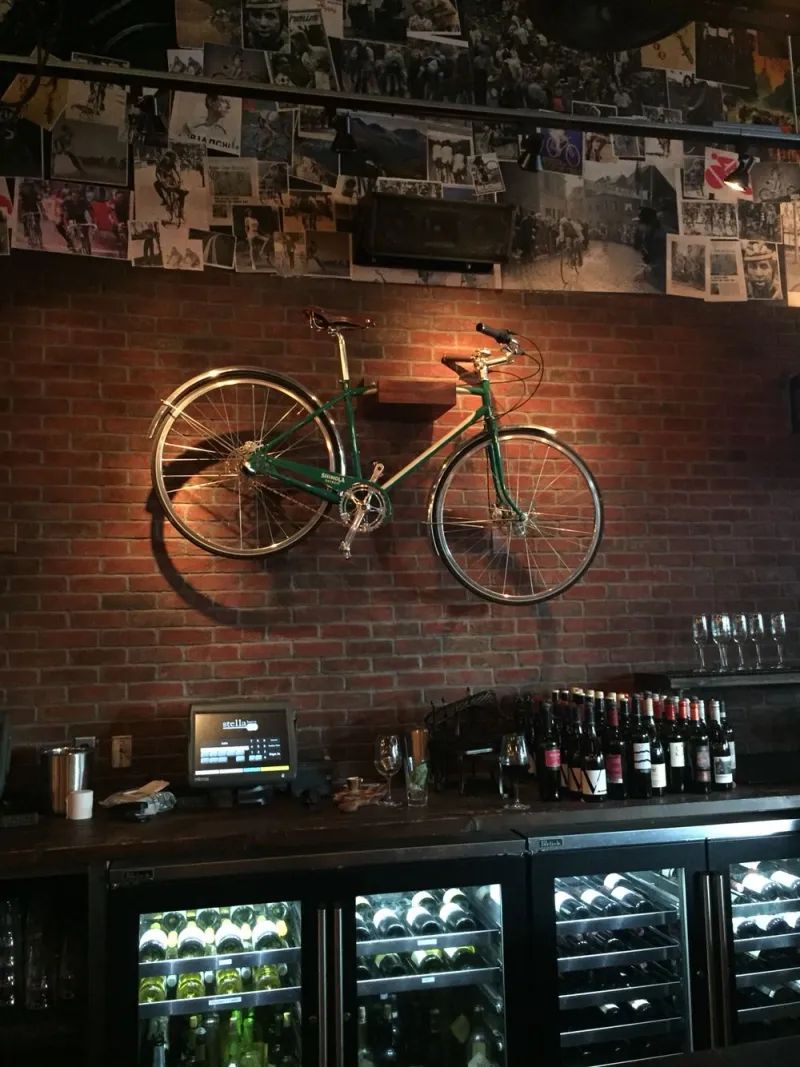
Photo: craft brewery bike shop interior bikes hanging on wall beer taps, via i.pinimg.com
The Handshake That Changed Everything
It starts the same way in almost every town. A brewery owner notices that cyclists keep rolling up after rides, still in kit, helmets clipped to bags, thirsty and loud and happy. A bike shop owner a few blocks away watches customers linger after tune-ups, not quite ready to head home. Somewhere between those two observations, someone has an idea.
That idea — pairing a craft brewery with a bike shop under one roof or across a shared courtyard — has quietly become one of the more interesting small-business trends in American communities. From Bentonville, Arkansas to Portland, Oregon, these hybrid spaces are popping up in college towns, post-industrial neighborhoods, and trail-adjacent suburbs alike. And they're not just surviving. They're becoming the kind of places people plan their weekends around.
More Than a Marketing Gimmick
It'd be easy to dismiss the brewery-bike shop combo as a lifestyle branding exercise — slap a fixie silhouette on a tap handle and call it a day. But the owners making these partnerships work are quick to point out the genuine business logic underneath the cool aesthetic.
Take the model you see at places like Spoke & Barrel in Chattanooga, Tennessee, or the collaborative arrangement between a gravel-focused shop and a taproom in Fayetteville, Arkansas, where trail access has turned the town into a mountain biking mecca. In each case, the two businesses serve overlapping customer bases at complementary times. The bike shop does most of its business in the morning and early afternoon. The taproom gets rolling in the late afternoon and evening. The customers who walk through one door are overwhelmingly likely to walk through the other.
"We stopped thinking of it as two businesses sharing a space and started thinking of it as one business with two revenue streams," said one co-owner of a combined shop-and-brewery in Asheville, North Carolina, who launched his operation after noticing that post-ride Saturdays were already generating more foot traffic than his shop's weekday hours combined. "The cyclists who come in for a tire swap are the same people who stay for a pint. We're not trying to convert anyone — they already converted themselves."
What the Space Actually Looks Like
The physical layouts vary more than you'd expect. Some operations are genuinely integrated — bikes hanging from the same ceiling as hop bines, a repair stand tucked beside the bar, merchandise mixing jerseys and branded glassware on the same shelf. Others keep the two sides of the business clearly separated but connected through a shared outdoor space, a bike valet station at the brewery entrance, or a loyalty program that rewards purchases on both sides.
Outdoor space tends to be the secret ingredient. A gravel lot with a bike rack and a few picnic tables becomes something entirely different when it sits between a shop with a pump track out back and a taproom with a garage door that opens onto the same courtyard. Cyclists can show up, lock up, grab a beer, watch someone else nail a line on the pump track, and feel completely at home. That sense of belonging — the feeling that this place was built for you — is hard to manufacture and nearly impossible to fake.
The Community Math
Beyond the business case, these partnerships are doing something quietly significant for the communities they land in. They're creating what urban planners call "third spaces" — places that aren't home, aren't work, and aren't a formal event, but where people gather anyway and end up knowing each other better.
Cycling culture already has a strong community orientation. Group rides, trail stewardship, local clubs — the sport generates social infrastructure almost automatically. When a brewery latches onto that infrastructure and gives it a physical home, the effects ripple outward. Rides get more organized. New riders show up because the endpoint feels welcoming rather than intimidating. Local trails get more advocacy because the people who use them are now seeing each other every week at the taproom.
In towns like Salida, Colorado and Marquette, Michigan, where outdoor recreation is already central to local identity, the brewery-bike shop combo functions almost like a community center with better beer. Charity ride fundraisers, beginner clinics, gravel route planning sessions — all of it gravitates toward a space that already has the right people and the right vibe.
What Makes Them Actually Work
Not every partnership succeeds, of course. Owners who've been through the process are pretty candid about the pitfalls. Misaligned values are the most common failure point — a brewery that's purely focused on volume production doesn't naturally mesh with a shop that's built around customer relationships and technical expertise. The businesses need to share a philosophy about what kind of place they want to be, not just a demographic they want to attract.
Authenticity matters more than almost anything else. The shops and breweries that pull this off tend to be owned by people who actually ride — people who show up to the Saturday morning group ride, who know the difference between a hardtail and a full-squish, who have opinions about tubeless setups. Customers can tell immediately when the cycling theme is a costume versus a genuine part of the culture.
Logistics matter too. Shared spaces require clear agreements about noise, hours, liability, and the occasional awkward situation of a customer who's had two IPAs deciding it's time to test-ride the demo bike. The operations that work best tend to have those conversations early and document them clearly.
Finding Your Own Version
If you're looking to experience one of these spaces firsthand, the best hunting grounds right now are mid-sized cities with established trail systems and active cycling communities — think Bentonville, Durango, Bellingham, and Greenville, South Carolina. Check local cycling club social pages and look for event listings that mention both a beer sponsor and a gear sponsor. That's usually a sign the two businesses are already working together.
And if you don't have one of these spaces in your town yet? That's a conversation worth starting. Find the brewery owner who rides and the shop owner who drinks good beer, introduce them over a pint, and see what happens. It's worked before.