Fix Your Flat, Then Grab a Pint: Why Smart Breweries Are Going All-In on Bike Infrastructure
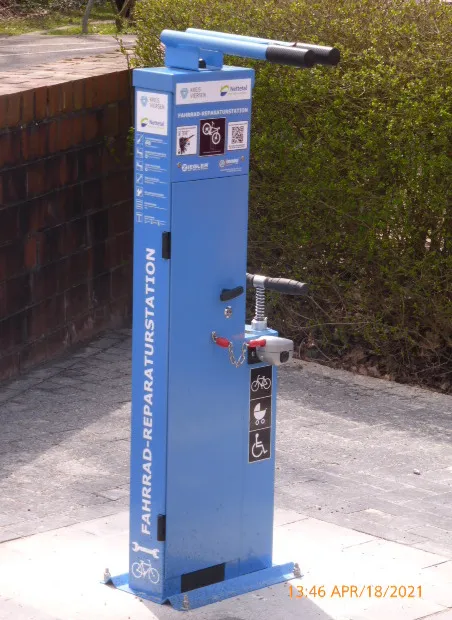
Photo: Kurwal, CC BY-SA 4.0, via Wikimedia Commons
There's a moment every cyclist knows. You're five miles from home, you've just rolled your rear wheel through something sharp, and the hiss of escaping air is the worst sound in the world. Now imagine that moment happening 200 yards from a brewery that has a floor pump, a patch kit, and a repair stand waiting on the patio.
That's not a fantasy. For a growing number of craft breweries across the United States, it's Tuesday.
The movement toward cyclist-friendly infrastructure at taprooms is picking up steam. What started as a niche feature at a handful of bike-obsessed breweries has quietly spread into a recognizable trend — one that's less about grand gestures and more about small, practical additions that make a real difference to riders who are already looking for a reason to stop.
What "Bike Infrastructure" Actually Means at a Brewery
The term sounds more complicated than it is. In practice, bike infrastructure at a taproom breaks down into a few core categories:
Secure parking. Not just a rack bolted to the sidewalk, but something that lets a rider lock their frame and feel confident walking inside. Covered options are better. Monitored or well-lit options are better still. For cyclists who've dropped serious money on a road or gravel bike, the difference between a flimsy hoop rack and a solid, sheltered parking area can determine whether they stop at all.
Repair stations. A wall-mounted or freestanding repair stand — the kind that holds a bike up by the seat post while you work on it — paired with a set of basic tools (Allen wrenches, tire levers, a chain tool) is the core of any useful setup. Some breweries bolt a multi-tool directly to the station on a retractable cable so nothing walks off.
Floor pumps. Simple. Cheap. Wildly useful. A quality floor pump with a gauge and a dual-head valve (Presta and Schrader) costs between $40 and $80 and will last for years. Cyclists notice when a business has one available. They remember it.
Patch kits and consumables. A few spare tubes in common sizes, some CO2 cartridges, and a basic patch kit kept behind the bar or at the host stand costs almost nothing and has saved more than a few rides.
Some breweries go further — loaner helmets, bike bags for carrying growlers, even basic cycling apparel for sale. But the core setup is modest, and that's the point.
The Investment Is Smaller Than You'd Think
Talk to brewery owners who've made the addition, and one of the first things they'll tell you is how surprised they were by the cost — or rather, the lack of it.
Sarah Dunning manages operations at a mid-sized craft brewery in Bentonville, Arkansas — a city that's become something of a cycling mecca thanks to its extensive trail network. She oversaw the installation of a full bike repair station, covered parking for 20 bikes, and a floor pump station outside the taproom entrance.
"Total cost, including the rack system and the repair stand, was under $800," she says. "We've gotten back that investment a hundred times over just in the number of cyclists who now consider us a default stop on their rides."
That's not an unusual number. A quality repair stand runs $150 to $300. A solid bike rack system for 10 to 20 bikes can be had for $200 to $500 depending on the style. Add a floor pump, some basic tools, and a few consumables, and a brewery can have a fully functional bike-friendly setup for well under $1,000.
For context: that's roughly the cost of a single mid-tier draft line installation, or about two weeks of social media advertising. The repair station doesn't have an expiration date.
Why It Works: The Psychology of the Grateful Cyclist
There's something specific that happens when a cyclist gets help they didn't expect. It's different from just finding a bar with good beer. It's the feeling of being seen — of arriving somewhere and realizing the people who run this place actually thought about you.
Rick Alvarez has been cycling recreationally for about six years and calls himself a "weekend warrior" who does 30 to 50 miles on Saturday mornings before the rest of his family is awake. He discovered a brewery in his area of suburban Chicago after stopping to use their repair stand following a mechanical issue on a group ride.
"I had a derailleur cable that was fraying," he says. "I didn't have the right tool. They had it. I fixed my bike, went inside, had two beers and a sandwich, and I've been back probably 20 times since then. I've brought at least a dozen people with me."
That kind of loyalty — organic, word-of-mouth, rooted in a genuine moment of utility — is what marketers spend years trying to manufacture. A repair station generates it naturally.
The Practical Guide: What Smaller Breweries Should Consider First
For taprooms thinking about making the jump, the smartest approach is to start with what creates the most immediate value for the least friction.
Step one: Talk to your local cycling community. Before you buy anything, find out who's already riding near your brewery. Is there a trail nearby? A popular road route? A local cycling club that's looking for a home base? Understanding the demand helps you size the investment correctly.
Step two: Install a floor pump and a basic tool station. This is the highest-value, lowest-cost starting point. Put it somewhere visible from the parking lot. Label it clearly. Tell people it's there.
Step three: Upgrade your parking. If you currently have a single hoop rack, add capacity. Cyclists often travel in groups, and arriving to find no secure place to lock up is a fast way to lose a table of six.
Step four: Consider a repair stand. This is the centerpiece of a serious setup. It signals commitment. It's also the thing cyclists talk about and photograph and post about. A good repair stand is visible proof that your brewery means it.
Step five: Stock a few consumables. Keep a small bin behind the bar with spare tubes, CO2, and patch kits. Sell them at cost or give them away. The goodwill generated is worth far more than the margin you'd make charging full retail.
Beyond the Tools: Making the Experience Stick
The infrastructure matters. But so does the attitude around it.
Breweries that really nail the cyclist experience tend to train their staff to be genuinely welcoming to riders — understanding that someone walking in with a helmet and cycling shoes isn't a nuisance, they're a customer who just finished a workout and is ready to spend money and stay a while.
Some taprooms have gone a step further, creating designated "recovery menus" with higher-carb food options and non-alcoholic beverages marketed specifically to riders who want to rehydrate before they drink. It's a small touch, but it communicates something important: we thought about you before you got here.
That's the real point of all of it. The repair stand, the pump, the secure parking — they're not just amenities. They're a message. They say that this brewery understands that some of its best customers arrive on two wheels, and it's built a place worth riding to.
In a crowded craft beer market, that kind of clarity of purpose is increasingly hard to fake — and increasingly worth having.