Pedal-Powered Membership: How Cargo Bikes Are Hauling Beer Club Deliveries
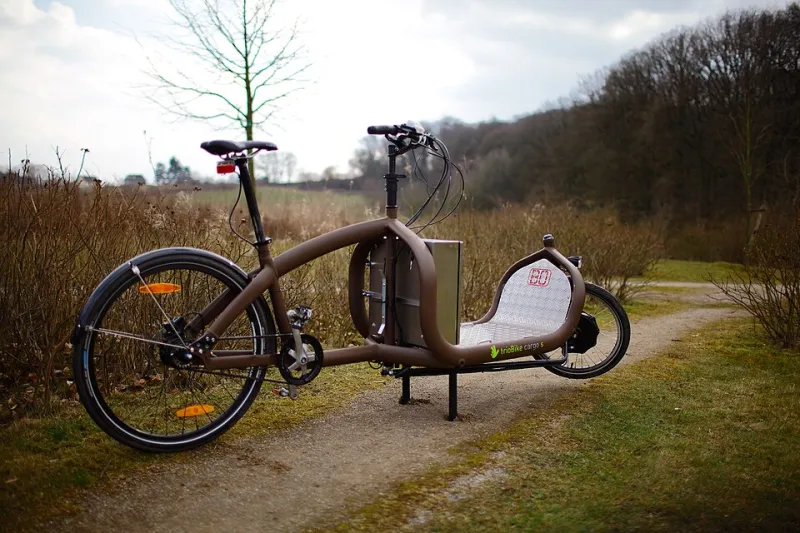
Photo: Cargo Pedelec, CC BY-SA 4.0, via Wikimedia Commons
There's a particular sound a cargo bike makes when it's carrying four cases of cans and a spare gallon of sanitizer: a low, slightly strained hum from the motor, a rattle from the rack, and a lot of attention from everyone on the sidewalk.
For a small but growing number of American breweries, that sound is the sound of a beer club running. Instead of a van doing eight stops across three zip codes, a staffer on an electric cargo bike handles a two-mile radius — memberships dropped at doorsteps, kegs swapped at accounts, growlers moved between two taproom locations. It is slower per stop and faster per mile, and in the right neighborhood it changes both the cost structure and the story.
The three-mile beer club
The model works best where distances are short and density is high: a walkable commercial corridor, a residential grid behind it, and enough members within a few blocks that a route sheet looks like a loop instead of a line.
Breweries testing this in 2026 generally fall into three patterns:
- Membership drop-off. Beer club members choose a delivery window instead of a pickup day, and their share arrives by bike.
- Account restocking. Small deliveries to nearby bars, bottle shops, and restaurants that don't warrant a full van run.
- Taproom-to-taproom transfers. Moving packaged beer and small equipment between locations in the same city.
All three share a trait: the goods are heavy per unit and light per delivery. That's the cargo bike's sweet spot.
What the law says about delivery by bike
This is the part that stops most projects before they start, and it varies enormously state to state.
Questions to answer with your alcohol regulator and your attorney before the first delivery:
- Does our license permit self-delivery to consumers at all? Several states allow it, some restrict it to in-state producers, and some prohibit it outright or route it through a third party.
- Is the vehicle type restricted? Most delivery statutes say nothing about bicycles, which is usually good for you — but 'usually' is not a legal opinion.
- How do we verify age at the door? Most states require an ID check and a signature, and a rider standing on a stoop needs a process, not a promise.
- Who is liable if the rider is in a crash while carrying beer? That question reaches vehicle and non-owned auto coverage, workers' comp, and your general liability policy.
- Do city rules allow cargo bikes on sidewalks, in bike lanes, or in loading zones? Some municipalities have specific cargo bike rules; most are silent.
The breweries that get this right tend to build the delivery permit into their licensing conversation early rather than bolting it on after the beer club already exists.
Capacity, cold chain, and the physics of a case of cans
Rough working numbers, depending on the bike: a longtail or front-loader with a sturdy rack and a strong motor can carry several hundred pounds of cargo plus a rider, but the usable payload is limited by the boxes, not the motor. Four cases of cans and a soft cooler is a realistic single run. A half-barrel keg is a different project and generally wants a purpose-built rig with a low center of gravity.
Weight distribution matters more than total weight. Load low, load centered, and keep the bike from getting top-heavy on a turn. Breweries running these routes tend to standardize on a few container types so the load is predictable every time.
Cold chain is the sleeper issue. Cans going to a doorstep in July are not in a cooler for the whole ride, so route order matters: drop perishable and temperature-sensitive items first, keep insulated bags on the rack, and schedule deliveries for the cooler part of the day. Some operators run morning routes for exactly this reason.
Route planning for a loaded rig
A cargo bike route is not a road bike route. Hills that feel fun unloaded are miserable with 200 pounds on the back, and a busy arterial that's fine for a confident rider is not fine with a wide load. Local operators tend to plan around:
- Grade and pavement. Avoid steep pitches and rough asphalt; a loaded front-loader on brick is a bad time.
- Protected infrastructure. Bike lanes and low-stress streets first, always.
- Loading zones and alley access. Know where you can legally stop for five minutes.
- A predictable loop. Members grouped by block, not by signup date.
- A weather plan. Rain cancels; ice cancels; heat pushes the route earlier.
What members actually think
Candidly, the customer reaction is the strongest argument for the whole idea. A case of beer arriving on a cargo bike is memorable in a way a van drop-off never is — people take photos, they talk to the rider, and the brewery gets a small piece of local identity out of the transaction. It also fits the way a lot of members already think about the brewery: as a neighborhood place, not a warehouse with a license.
Members do need clear expectations. Delivery windows are wider than a van's, order minimums matter, and the bike doesn't do stairs. A short welcome email explaining all three prevents most complaints.
Where the model breaks
Be honest about the ceiling. A cargo bike will not replace a van for wholesale distribution, and it doesn't scale past a tight radius. Rain and snow reduce the operating days. Rider availability is a real constraint, because you need someone who can both handle a loaded bike and check an ID at a door. And the cost of a good e-cargo bike plus maintenance and insurance is not trivial.
What it does well is convert a fixed delivery cost into a visible, local, low-emission ritual — one that happens to reinforce exactly the thing a bike-friendly brewery is selling.
If your brewery wants to try it
Start with one route and one staffer. Pick the densest cluster of members you have. Get the licensing answer in writing. Buy or lease a bike rated well above your expected load. Insure the activity explicitly. Test the route loaded before you promise a window. Then run it for a season and measure fuel savings, delivery hours, and — the number that matters most — how many members tell a friend about the day their beer showed up by bike.