Five Taps, One Hundred Miles: Building the Brewery Century You'll Actually Finish
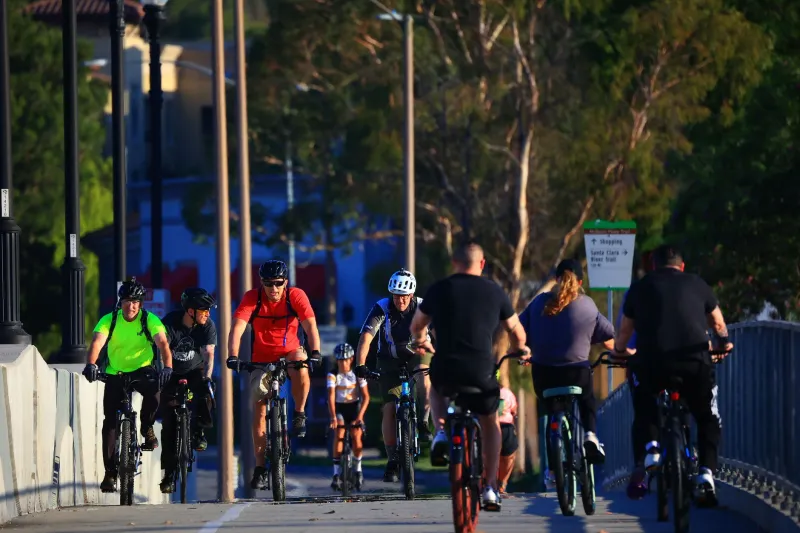
There's a particular kind of math that happens when cyclists who like beer get together after a long ride. Someone says, "What if we rode to more than one brewery?" Someone else says, "What if we rode to ALL of them?" And that, friends, is how the brewery century is born: five taprooms, one hundred miles, one very long day in the saddle.
Done right, it's the best ride on your calendar. Done wrong, it's a hundred miles that end at mile sixty with someone weeping into a hazy IPA. Here's how to build one that works.
Pick Corridors That Were Made for This
Not every region can support a brewery century, but a surprising number can. The trick is finding stretches of country where craft beer density and rideable roads overlap.
- Colorado's Front Range remains the gold standard. A loop threading Fort Collins through Loveland, Longmont, and Boulder can stack New Belgium, Oskar Blues, Left Hand, and more without ever leaving bike-friendly roads.
- Portland, Oregon's surrounding valleys — especially a Beaverton-to-Hood River-style out-and-back — pair winery-free miles with a taproom scene that never quits.
- Vermont's Route 100 corridor links a shocking number of world-class breweries within a century's reach, though the climbing means your five stops should include serious food.
- San Diego County offers a coastal-inland loop where the beer scene practically invented the modern IPA.
- The Twin Cities' trail network — the Midtown Greenway connecting into the Gateway and Brown's Creek trails toward Stillwater — lets you rack up miles on car-free paths with breweries bookending the day.
Whatever region you choose, prioritize roads with shoulders or trail miles. A nervous rider on busy highways doesn't get better with each stop.
The Spacing Formula
Here's the rule that separates a great brewery century from a disaster: no stop before mile 25, no stop after mile 90.
Stop too early and you're drinking on cold muscles, which hits twice as hard and makes mile 40 feel like mile 80. Stop too late and you've turned your finish into a solo time trial after the fun part's over.
A clean five-stop layout looks like this:
| Stop | Mileage | Purpose |
|---|---|---|
| 1 | ~30 | First reward, light pour |
| 2 | ~50 | Midpoint, real food |
| 3 | ~65 | Quick leg-stretch, water focus |
| 4 | ~80 | The "almost there" stop |
| 5 | ~100 | Finish line, anything goes |
Notice the pattern: stops get shorter and more intentional as the day goes on. Early stops are breaks. Late stops are checkpoints.
Sizing Your Pours Like an Adult
Nobody wants to say it, so we will: a full pint at every stop is five pints. That's not a ride, that's an intervention.
The pros of the brewery century format treat stops one through three as tasting-flight territory. Four-ounce pours let you sample the house specialties without sabotaging the back half of your day. Save full pints for stops four and five, when the miles are mostly done and your only remaining job is the walk to the car.
A good rule of thumb: never exceed one standard drink per 20 miles ridden, and front-load your water and food relative to alcohol at every single stop. Which brings us to the next point.
Food Is Not Optional
The fastest way to end a brewery century early is riding the back half on beer and nothing else. Every stop after the first should involve calories that aren't liquid, and stop two — the midpoint — needs to be a real meal.
When mapping, check each taproom's food situation in advance. Some breweries have full kitchens; some have a food truck schedule that may or may not cooperate with your arrival time. If stop three is a taproom-only operation, plan a gas station or deli stop within a mile of it and treat that as part of the stop. A peanut butter sandwich from a convenience store at mile 65 has saved more century rides than any carbon frame ever will.
The Designated Driver Question
Let's be honest about the end of the day: after five stops, even well-paced riders shouldn't be driving. Build your plan around one of these options:
- The shuttle car. Drop a vehicle at the finish the night before with keys hidden, then ride point-to-point. Someone sober drives the crew home the next morning, or you've arranged a pickup.
- The out-and-back. Start and end at a taproom within walking or very short ridesharing distance of your lodging. This is the cleanest logistics of all.
- The loop with a sober captain. One rider commits to zero alcohol and earns eternal gratitude. Rotate the honor among your group so nobody becomes the permanent designated adult.
Option three works, but only with a rider who genuinely doesn't mind. A resentful sober captain is a dark energy on a group ride.
Pacing the Miles Between the Pints
A brewery century is not a race. Set a moving-time expectation of eight to ten hours with stops, which means an actual day — roughly 7 a.m. start, 6 p.m. finish. Start early precisely so your later stops can be longer and lazier.
Ride the first half at a conversational pace. The temptation after a fun first stop is to hammer, and the brewery century punishes hammering like few other formats. Keep the group together, keep the effort easy, and let the stops be the intensity of the day.
Your First One: Keep It Simple
If this is your first go, don't chase five stops in five towns. Build a loop with two anchor breweries you know well and three new discoveries, keep the total under 100 miles if the terrain is hilly, and give yourself permission to cut a stop if the day runs long.
The brewery century isn't about heroics. It's about proving that a hundred miles and five taprooms can coexist in one glorious, well-hydrated day. Map it smart, eat real food, size your pours, and finish with the pint you've earned — not the ride you regret.
Now go check your region's brewery map. We'll wait.