Resupply by Taproom: Why Bikepackers Are Routing Multi-Day Rides Through Craft Beer Country
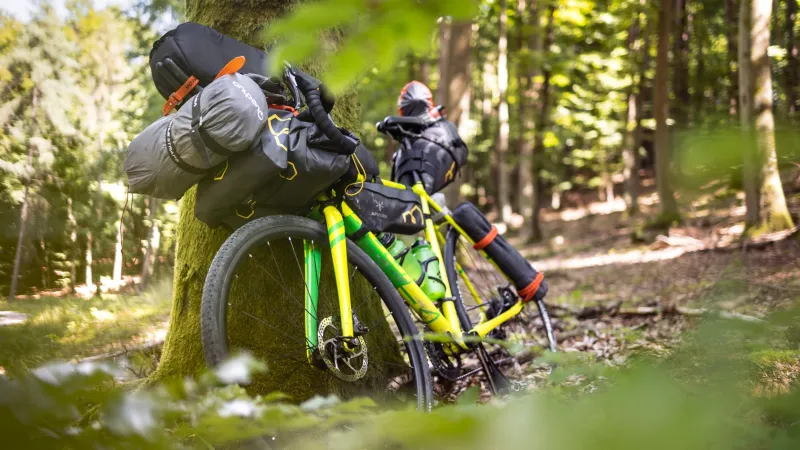
Somewhere on a gravel forest road in western North Carolina, a rider checks her GPS and sees two options for the next resupply: a gas station 11 miles ahead, or a farmhouse brewery 14 miles ahead that — according to the route notes — has a grass lot for tents, a garden hose, and outlets on the porch.
She picks the brewery. Increasingly, so does everybody else.
The New Resupply Point Serves Pints
Unsupported bikepacking has always been an exercise in logistics. You carry what you need, you find water where you can, and you resupply wherever the route crosses civilization. But as the sport has exploded across the US, a quiet shift has happened: route-planners are treating small craft breweries as legitimate infrastructure.
It makes sense when you think about it. Breweries are almost always located in the kind of places bikepackers want to ride — small towns, river valleys, old mill districts, the edges of farmland. They have water. They have restrooms. Many have food trucks or kitchens. And unlike a gas station on a highway shoulder, they're places where a dusty rider with a fully loaded rig is a welcome sight rather than a curiosity.
"We started noticing riders camping behind the building about five years ago," says the owner of a small farmhouse brewery in Virginia's Shenandoah Valley. "Eventually we just made it official. Tent sites out back, a hose, a charging strip inside, and a rider discount on the first pint. Now it's a third of our summer weekend business."
Gear Makes Room for the Growler
The trend has reached the gear world, too. Frame bag makers — a category built around odd-shaped bottles and tools — have started designing specifically for beer transport. There are now downtube bags sized for 32-ounce growler-style bottles, top-tube bags with insulated liners for cans, and rear harness systems marketed squarely at riders who want to carry a couple of draft pours back to camp.
The logic isn't purely indulgent. Cans are among the most packable, crush-resistant calorie carriers you can strap to a bike, and a post-60-mile pint has a way of loosening up camp conversation that no freeze-dried meal can match. Several bag makers we spoke with said beer-carrying designs are among their fastest-growing SKUs, mostly bought by riders in their 30s and 40s — the demographic that aged out of the dirtbag van life but not the desire to ride all day and land somewhere good.
How Breweries Are Becoming Trail Towns
Smart brewery owners have caught on. The playbook looks like this: a flat patch of grass designated for tents, a water spigot, an outdoor outlet or two, and a listing on bikepacking route platforms like Bikepacking.com or WarmShowers-adjacent forums. Some add bike stands, basic tools, and a loaner pump. The investment is minimal — a few hundred dollars — and the payoff is a steady trickle of riders who arrive thirsty, spend generously, and post their stay to thousands of followers.
In towns like Bend, Oregon; Paonia, Colorado; and Floyd, Virginia, breweries have effectively become the anchor institutions of a new kind of trail network — one that doesn't require a trail at all, just quiet roads and a taproom at the end of them.
A Sample Three-Day Brewery Loop
Want to try it? Here's a template for a self-supported three-day loop in the mid-Atlantic, roughly 130 miles with a mix of gravel and pavement. Swap in your region's equivalent — the pattern works almost anywhere with a rural brewing scene.
Day 1 — 45 miles. Roll out of a mid-size town in the morning and ride quiet valley roads to a rural brewery with camping. Fill bottles at the spigot, eat a real dinner, charge devices, and be asleep by 9:30.
Day 2 — 50 miles. The big day. Climb out of the valley on forest service gravel, descend into a river town with two breweries within a half-mile of each other. Pick one for lunch, the other for the evening. Camp at whichever one lets you pitch a tent in the back lot.
Day 3 — 35 miles. An easy spin back toward your start point with one final stop: a brewery within sight of a rail trail, close enough to town to grab a shower and a real meal before heading home.
Total brewery visits: five. Total gas station resupplies: zero.
Ride Hard, Pour Well, Leave No Trace
One caveat, and it matters: this whole ecosystem runs on goodwill. Camp only where you've been invited, buy more than one beer, pack out your empties, and tip like your route depends on it — because eventually, it does. The breweries hosting riders aren't campgrounds. They're businesses doing riders a favor, and the best bikepackers treat them that way.
But if the trend keeps growing, the future of unsupported riding might look a lot less like freeze-dried meals in a ditch and a lot more like a grassy lot behind a farmhouse brewery, a hose that actually runs cold, and a pint that tastes like it was earned. Because it was.