Wrenches on the Wall, Beer on Tap: The Rise of the In-House Brewery Bike Mechanic
The Pit Stop You Actually Want to Make
Picture this: you're halfway through a 40-mile loop, your rear derailleur is skipping like a scratched record, and the nearest dedicated bike shop is six miles off your planned route. Then somebody in your group mentions the brewery up ahead has a mechanic on staff. You make the turn, hand your bike over, and twenty minutes later you're sitting at a picnic table with a cold Czech-style pilsner in your hand while a certified tech sorts out your drivetrain.
This isn't a fantasy. It's Tuesday at a handful of forward-thinking taprooms scattered across the country — and the model is catching on faster than most people in the craft beer world expected.
Breweries have been flirting with bike culture for years. Bike racks, group ride meetups, cycling jerseys on the merch wall — all of it has become standard scenery at the kind of place that takes both its hops and its community seriously. But hiring an actual, wrench-turning mechanic? That's a different commitment entirely, and the breweries doing it say it's one of the smartest operational decisions they've ever made.
Why a Mechanic Makes Business Sense
At first glance, adding a bike repair station to a taproom sounds like a branding exercise — something you do to look cool in a press release. Talk to the people actually running these operations, though, and a pretty clear business logic emerges.
The core insight is simple: cyclists who stop to get their bike fixed don't leave. They sit down. They order a beer. Then they order another one while they wait. Then they grab something to eat. By the time their bike is ready, they've been in your taproom for an hour and a half, they've had a genuinely good experience, and they're already planning to come back.
Dwell time is everything in the taproom business. A customer who stays ninety minutes spends significantly more than one who stays thirty, and they're more likely to remember the place fondly. A bike mechanic, it turns out, is a dwell-time machine.
There's also the matter of the ride community being tight-knit and loud about places they love. Word travels fast on Strava, in group chat threads, and at the trailhead. A brewery that genuinely solves a real problem for cyclists — not just hangs a few bikes on the wall as decoration — earns a reputation that no amount of Instagram advertising can replicate.
What the Setup Actually Looks Like
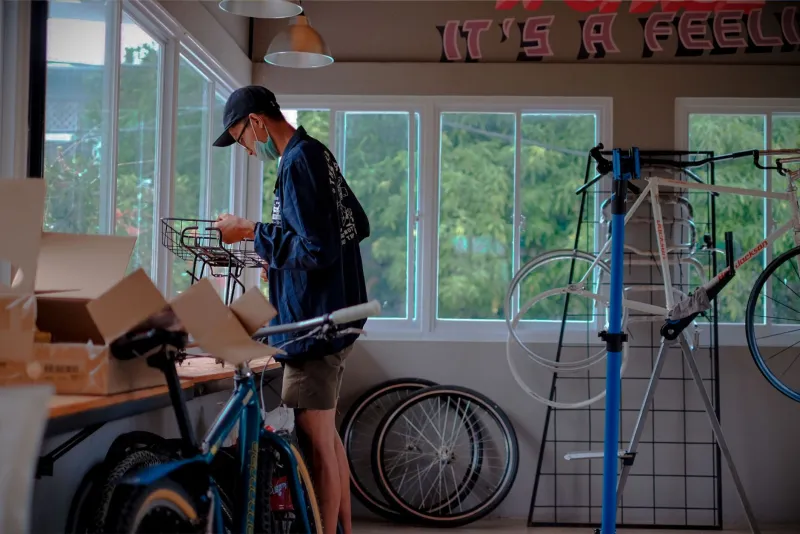
The physical footprint varies depending on the brewery's space and ambitions. Some operations run a full service bay with a floor stand, a proper tool wall, and a parts inventory covering the most common trail-side failures: cables, housing, tubes, brake pads, chain links, and derailleur hangers. Others keep it leaner — a portable stand, a basic toolkit, and a mechanic who can handle the 80 percent of issues that account for most roadside breakdowns.
Location matters a lot. The breweries seeing the most traction with this model tend to sit along established trail corridors or at natural stopping points on popular cycling routes. If you're already the logical place to refuel, adding mechanical support just deepens the reason to stop.
Staffing models differ too. Some taprooms hire a full-time mechanic who splits time between the repair stand and other floor duties during slow periods. Others bring in a part-time tech on weekends, which is when the bulk of recreational riders are out. A few have partnered informally with local bike shops, essentially hosting a satellite service presence in exchange for cross-promotion — the mechanic works at the brewery on Saturdays, sends major repair jobs back to the shop, and everybody wins.
Finding the Right Person for the Job
Hiring a certified bike mechanic isn't like posting a general help-wanted ad. The pool of people with legitimate technical credentials — think Barnett Bicycle Institute certification or equivalent hands-on shop experience — is smaller than you'd expect, and the best ones often already have full-time gigs.
What tends to work is looking inside the existing community. The cycling regulars who already love your taproom are the obvious starting point. Plenty of experienced home mechanics and former shop techs would jump at a gig that combines their two favorite things. Posting in local cycling Facebook groups, reaching out to regional cycling clubs, and talking to nearby bike shops about anyone they know who might be looking for something different can all surface good candidates.
The cultural fit matters as much as the technical skill. You want someone who genuinely enjoys talking to customers, can explain what's wrong with a bike in plain language, and understands that the repair stand is also a hospitality function. The mechanic who makes a nervous rider feel taken care of is worth far more than one who's technically brilliant but unfriendly.
The Rider Experience Changes Everything
Ask any cyclist about their worst ride experiences and mechanical failures rank near the top — not just because they're inconvenient, but because they're stressful and often involve standing on the side of a road or trail feeling helpless. A brewery that removes that stress and replaces it with a cold drink and a comfortable seat has done something genuinely valuable.
There's also something about the combination that just feels right. Cycling culture has always had a strong DIY, hands-in-the-grease ethic — the same spirit that drives craft brewing. Both worlds attract people who care about craft, who appreciate knowing how things work, and who'd rather support a local operation than a faceless chain. A taproom with a mechanic on staff speaks directly to that overlap.
Regular riders start to think of these places as their home base. They plan routes around them. They bring new people. They show up on weekdays because they know the mechanic will be there. That kind of loyalty is the thing every small brewery is chasing, and it turns out a torque wrench can help build it.
If You're a Brewery Thinking About This
Start smaller than you think you need to. A weekend mechanic, a basic stand, and a curated parts inventory for common fixes will tell you quickly whether your customer base wants this. Track the numbers — how long are mechanic customers staying, what are they spending, are they coming back? The data will make the case for expanding or scaling back.
Be honest about liability too. Talk to your insurance provider before you hang the first wrench on the wall. Most situations are straightforward, but you want to be covered and you want your mechanic working under a clear scope of service.
And don't underestimate the marketing angle. When a brewery in your region becomes known as the place where you can get your bike fixed and drink excellent beer, that story writes itself. Local cycling media, Strava segments nearby, trail apps — there are a lot of channels where that message lands with exactly the right audience.
The brewpub bike mechanic isn't a gimmick. It's a genuine service that solves a real problem for a community that already loves what you're making. That's about as solid a foundation as any taproom amenity can have.