Dirt, Drafts, and a Whole New Kind of Venue: How Breweries Are Building Bike Parks Out Back
The Backyard Nobody Was Using
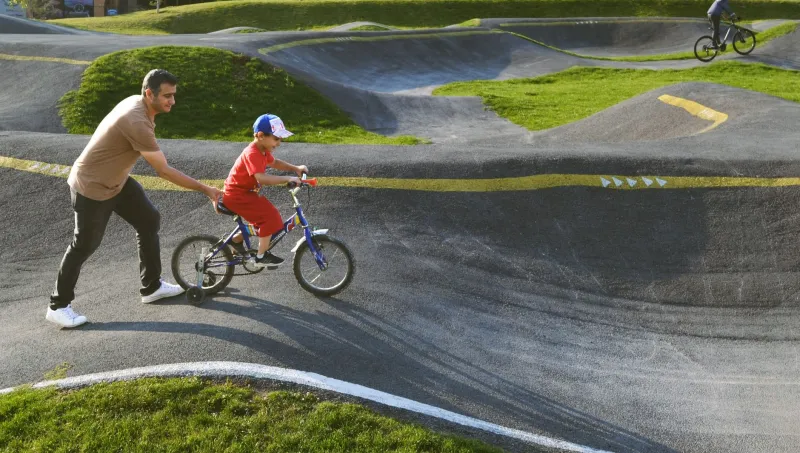
Drive out to a craft brewery these days, and you might find something unexpected parked behind the taproom: a sculpted dirt pump track, a set of wooden kickers, or the beginnings of a bona fide flow trail weaving through the tree line. It's not a fluke. Across the country, a small but fast-growing wave of brewery owners is deciding that the best thing they can do with their extra land isn't more picnic tables — it's a bike park.
The idea sounds a little wild at first. Breweries make beer. Bike parks are where you shred. But spend five minutes at one of these hybrid venues and the logic clicks into place pretty fast.
"We had about two acres out back that was basically just weeds and a gravel pile," says Marcus Holt, co-owner of Ridgeline Fermentation in Bentonville, Arkansas — a town that's already become something of a mecca for mountain bikers. "We started talking to our regulars, and almost half of them were riders. So we thought, why not give them a reason to show up before they're ready to sit down?"
They broke ground on a small pump track and a beginner flow loop in the spring. By summer, weekend traffic had doubled.
More Than a Marketing Gimmick
It'd be easy to dismiss the brewery-bike-park combo as a novelty — a clever Instagram backdrop that doesn't really move the needle on revenue. But the numbers and the anecdotes tell a different story.
For starters, a pump track or skills area doesn't require the kind of land or budget that would stop most small business owners cold. A well-built pump track can be installed on as little as 5,000 square feet, and modular dirt or asphalt versions can come in well under $50,000 depending on scope. That's a real investment, sure, but it's also a durable one — dirt doesn't need to be replaced the way tap handles do.
More importantly, it solves a persistent problem that brewery owners have been quietly wrestling with for years: what happens when someone in your group doesn't drink?
"We'd get families where one person was pregnant, or someone was in recovery, or the kids were along for the ride — literally," says Dani Kowalczyk, who co-owns Tailwind Brewing Co. in Chattanooga, Tennessee. "Those people would kind of hang around awkwardly while everyone else had a beer. Now they're out on the track, and honestly sometimes they're having more fun than the people inside."
That shift matters. Craft beer culture has worked hard to position itself as inclusive and community-driven, but the reality is that a venue where the central activity is drinking has a built-in ceiling on who feels genuinely welcome. A bike park blows that ceiling off.
Who's Actually Showing Up
The demographic impact has been one of the bigger surprises for owners who've made the leap. Mountain biking already skews toward the 25-to-45 crowd — overlapping neatly with the core craft beer consumer. But the addition of a rideable feature on-site is pulling in people who might never have wandered into a taproom on their own.
"We're seeing a lot of teenagers," says Holt. "They come with their parents, they hit the track for an hour, and then the whole family hangs out. The parents buy food and beer, the kids get a soda and a soft pretzel, and everyone's happy. That wasn't happening before."
For breweries in college towns or mid-sized cities with active outdoor scenes, the appeal to younger adults has been equally pronounced. A 22-year-old who might not feel the pull of a traditional taproom vibe will absolutely show up if there's a pump track and a can of hazy IPA waiting on the other side.
Some venues are leaning into this hard, hosting beginner skills clinics, kids' ride days, and informal evening sessions that double as social events. The bike park becomes the hook; the brewery is the reward.
Building It Right
Not every brewery owner who wants to build a track knows how to build one. That's where a small but passionate community of bike park designers and trail builders has stepped in — many of them cyclists themselves who saw an opportunity to combine two things they love.
The key, according to most builders, is matching the feature set to the actual skill level of the expected audience. A taproom crowd isn't the same as a dedicated trail center crowd. Most people showing up on a Saturday afternoon aren't looking for a gnarly black diamond experience. They want something fun, approachable, and rewarding — something they can lap a dozen times without getting hurt or frustrated.
"Pump tracks are the perfect entry point," says trail builder and longtime cyclist Jesse Abramowitz, who has worked on several brewery-adjacent projects in the Pacific Northwest. "They're self-contained, they're safe for a wide range of abilities, and they're addictive. Once someone figures out how to carry speed through a roller, they're hooked. And then they go inside and tell their friends about it over a beer."
Flow trails with gentle grades and predictable lines are another popular option, especially for breweries with more acreage to work with. A few ambitious spots are even adding small jump lines or dirt jumps for the more experienced riders in their crowd — though most owners are careful to keep those features clearly separated from the beginner zones.
The Community Angle
What's striking about the breweries that have gone all-in on this model is how deliberately they're positioning themselves as community hubs rather than just places to buy beer. The bike park is part of that story, but it's not the whole thing.
Tailwind Brewing in Chattanooga has partnered with a local mountain bike advocacy group to host trail workdays, with volunteers getting a free pint at the end. Ridgeline Fermentation sponsors a youth riding program that uses their pump track for weekly practice sessions. Other spots are hosting charity ride events that finish at the taproom, with a portion of beer sales going to trail maintenance funds.
"We're not just selling beer," says Kowalczyk. "We're trying to be a place that actually matters to people. The bike park is a big part of that. It gives people a reason to come back even when they're not in the mood to drink, and it ties us to something bigger than ourselves."
That sense of purpose — of a business genuinely embedded in a community rather than just extracting from it — resonates with the kind of customer who becomes a regular. And regulars are the lifeblood of any independent brewery.
What's Next
The trend is still young enough that it hasn't hit every corner of the country yet. But the ingredients are in place for it to spread fast. Craft brewing is increasingly competitive, and differentiation matters more than ever. Cycling participation has been climbing steadily since the early pandemic boom and hasn't fully retreated. And the hunger for third places — venues that are genuinely fun, genuinely welcoming, and not just about spending money — isn't going anywhere.
If you've got a brewery near you that's sitting on a chunk of unused land, it might be worth dropping a hint. A pump track and a cold pint after a session? That's not a gimmick. That's a genuinely good afternoon.