Why Your IPA Tastes Better After a Mountain Climb Than a Flat Spin
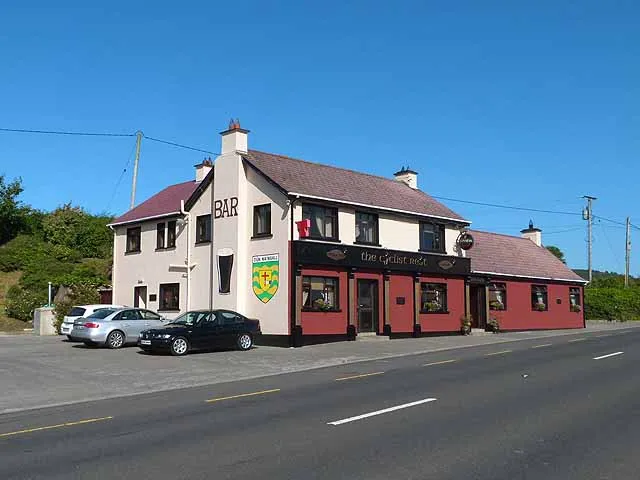
Photo: Oliver Dixon , CC BY-SA 2.0, via Wikimedia Commons
There's a moment every cyclist knows. You've just crested something brutal — a long alpine grind, maybe, or a relentless series of switchbacks above 8,000 feet — and you finally sit down at a taproom picnic table with a cold IPA in your hand. The first sip hits different. Not just satisfying-different. Actually, chemically, perceptually, different.
That's not sentiment talking. That's your body.
The connection between terrain, physical exertion, and flavor perception is something craft brewers in mountain towns have been quietly observing for years, and cycling physiologists are starting to catch up with the science. What you ride before you drink shapes what you taste when you drink. And the geography of where a brewery sits influences not just what goes into the beer, but how that beer lands on a tired, altitude-adapted palate.
Altitude Does Strange Things to Your Taste Buds
If you've ever flown cross-country and noticed that airport food tasted oddly flat, you already understand the basic principle. Lower air pressure and drier air — both hallmarks of high altitude — reduce your ability to detect certain aromatic compounds. Sweetness and saltiness tend to dull first. Bitter and sour notes, on the other hand, can become more pronounced.
Now take that same effect and apply it to someone who just rode 4,000 feet of vertical gain. Your nasal passages are drier. Your mouth has been breathing hard for two hours. Dehydration, even mild, concentrates your saliva and changes how flavor compounds bind to your taste receptors.
"After a hard mountain ride, cyclists are often mildly dehydrated and their senses are slightly heightened in some ways and dulled in others," says one Colorado-based sports dietitian who works with endurance athletes. "Bitter compounds in hops can register more intensely on a depleted palate. That's part of why a well-hopped IPA feels so satisfying — your body is primed to receive it."
Breweries in places like Durango, Fort Collins, and Bend, Oregon have been refining their hop-forward beers with exactly this customer in mind, whether they've articulated it that way or not.
What the Brewmasters Are Noticing
Talk to enough brewers in mountain towns and a pattern emerges. Their local regulars — the ones rolling in after trail rides or road climbs — respond differently to the same beers than visitors who drove up from the flatlands.
One head brewer at a small taproom outside Boulder put it plainly: "Our hoppy pale ales tend to read as more aggressively bitter to someone who just drove up from Denver than to a regular who's been riding at elevation all summer. We've actually dialed back the dry-hop additions a bit over the years because our core customers are so attuned to those flavors."
That kind of adjustment isn't unusual. Regional brewing has always been influenced by local water chemistry, local ingredients, and local climate. But the consumer side of the equation — the physiological state of the person drinking the beer — is a newer conversation in craft brewing circles.
Hops varieties also behave differently based on where they're grown and how they're stored at elevation. Lower humidity and UV exposure in high-altitude storage conditions can accelerate certain oxidation processes in whole-cone hops, subtly shifting the aromatic profile before the beer is even brewed. A brewery in Asheville, North Carolina, dealing with humid Appalachian summers is working with hops that have aged differently than one in the dry Colorado Rockies.
Flat Terrain, Different Chemistry
Now flip the scenario. You've just finished a long, steady ride along a coastal route — say, somewhere on the Oregon coast or the Gulf side of Florida. The terrain was flat, the air was humid and salt-tinged, and your effort was sustained but never explosive. You're sweaty and ready for a beer, but your body is in a different state than the mountain climber's.
Humid coastal air keeps your nasal passages more hydrated. Your palate is less parched. Moderate exertion without the altitude factor means your taste receptors haven't been pushed into the same heightened-bitter sensitivity. The result? That same IPA might taste softer, more balanced, even a little sweeter.
Breweries in coastal regions tend to lean into this. Juicy, hazy New England-style IPAs — with their lower perceived bitterness and tropical fruit-forward profiles — have become enormously popular in coastal communities. Some of that is trend-chasing, sure. But some of it is genuine regional fit. A beer that emphasizes mango and passionfruit aromatics over resinous pine bitterness is a natural match for someone whose palate isn't in altitude-sharpened bitter-detection mode.
The Terrain Loop: Ride, Perceive, Repeat
Here's where it gets interesting for the craft beer and cycling community specifically. The rides you do regularly don't just shape your fitness — they shape your flavor expectations.
Cyclists who train primarily in mountainous terrain tend to develop a preference for beers with assertive hop character, not because they decided to, but because that's what satisfies their post-ride palate over and over again. Coastal and flatland riders often gravitate toward maltier, more rounded profiles. Neither preference is wrong. Both are responses to a feedback loop between terrain, exertion, and taste.
A few breweries are starting to lean into this explicitly. Some mountain taprooms now organize group rides that end with guided beer pairings designed around the effort level of the ride. The idea is simple: the beer you drink after a 3,000-foot climb should be chosen with that physiological context in mind, not just grabbed randomly from the tap list.
How to Use This on Your Next Ride
You don't need a brewing science degree to put this to work. Next time you're planning a ride that ends at a taproom — and at Cycle Brewery Town, we'd argue all rides should end at a taproom — think about the terrain you're covering.
After a significant climb or a high-altitude route, lean toward West Coast IPAs or double IPAs with resinous, piney hop character. Your palate is primed for it. After a long flat grind or a coastal cruise, try something hazy and juicy, or even a well-constructed amber or pale ale that lets the malt backbone come through.
And if you're lucky enough to be riding in a region where the brewery actually sits at elevation — Telluride, Taos, Flagstaff — pay attention to how the beer tastes compared to the same style you've had at sea level. The difference is real, and it's worth noticing.
The terrain shapes the ride. The ride shapes the drinker. And somewhere in that loop, the beer tastes exactly right.