When the Stopwatch Meets the Fermentation Tank: How Interval Training Is Reshaping Craft Beer Science
Photo: Internet Archive Book Images, No restrictions, via Wikimedia Commons
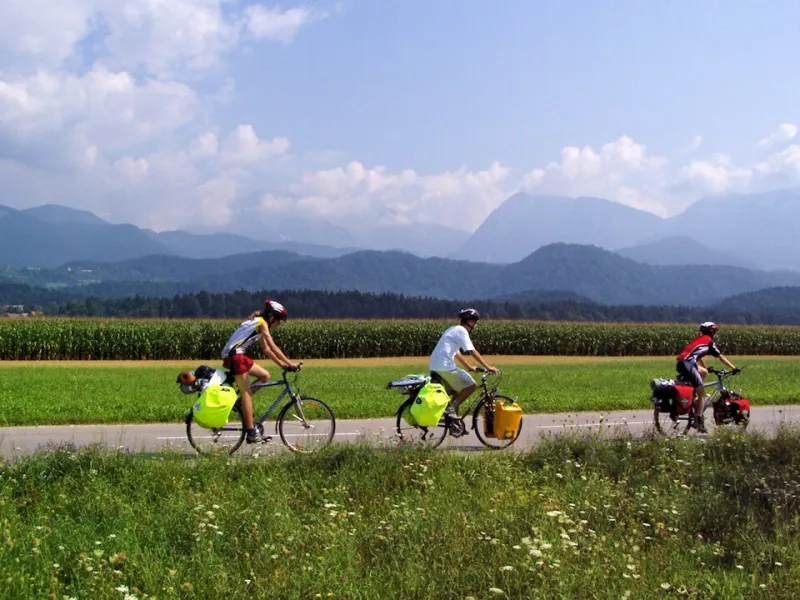
There's a moment every cyclist knows well. You're forty minutes into a hard interval session, your legs are burning somewhere past discomfort, and your body is negotiating a truce between effort and collapse. Brewmaster Caleb Norris knows that moment too — he just happens to think about it while standing over a fermentation vessel in his Colorado taproom, watching yeast do its work.
"Yeast under stress behaves a lot like a rider pushing threshold," Norris says, wiping his hands on a grain-dusted apron. "You push it too hard for too long, it breaks down and produces off-flavors. But if you cycle the stress — work it hard, back off, let it recover — you get something really complex and beautiful."
Norris is part of a small but growing cohort of American craft brewers who are drawing a surprisingly straight line between the principles of cycling periodization and the science of fermentation. What started as casual conversation on group rides has, for some of them, turned into a legitimate methodology — one that's changing how they schedule temperature ramps, time dry-hop additions, and think about the biological rhythms inside their tanks.
Periodization 101 — and Why It Applies to a Tank Full of Yeast
For cyclists, periodization is the backbone of any serious training plan. The idea is simple enough: alternate between high-intensity effort and structured recovery to build fitness progressively without burning out. You don't go full gas every single day. You build, you rest, you adapt, you repeat.
Fermentation, it turns out, operates on a surprisingly similar logic. Yeast cells are living organisms, and like any organism under exertion, they respond differently depending on how much stress they're under and how much time they're given to recover between demands.
Brewer and competitive cyclist Dana Whitfield, who runs a small production brewery outside Asheville, North Carolina, started experimenting with what she calls "interval fermentation" after a particularly hard training block a few years back. "I was doing VO2 max intervals on the trainer and just thinking about yeast metabolism," she laughs. "It sounds ridiculous, but the parallels were right there. Both systems produce metabolic byproducts under stress. Both need windows of lower intensity to clean those byproducts up."
In practical terms, Whitfield began manipulating fermentation temperature in patterns that mirrored interval structures — short bursts of elevated warmth to drive yeast activity, followed by deliberate cool-down phases that slowed things down and allowed the yeast to reabsorb compounds like diacetyl, which can give beer an unwanted buttery character. The results, she says, were cleaner finishes and more expressive hop character in her IPAs.
The Lactate Threshold of a Fermenting Beer
If you want to get technical — and brewers like Norris absolutely do — the analogy runs even deeper than temperature management.
In cycling, lactate threshold is the intensity at which lactic acid accumulates faster than your body can clear it. Cross that line for too long and performance degrades rapidly. In fermentation, yeast cells produce alcohol and carbon dioxide as primary outputs, but under high-stress conditions — too much sugar too fast, temperatures that spike unpredictably — they also generate fusel alcohols and other compounds that degrade beer quality.
"There's a fermentation equivalent of going into the red," Norris explains. "You overpitch, you spike the temp, you rush the process, and the yeast cranks out all these harsh byproducts. It's like asking a rider to sprint for an hour. Something's going to break."
His solution borrows directly from how coaches structure training loads. He uses what he describes as a "build-taper" approach to pitching rates and temperature schedules — starting yeast colonies with slightly lower cell counts to encourage gradual adaptation, then introducing controlled stress at strategic points in the fermentation arc. The payoff, he argues, is a yeast population that's more metabolically efficient by the time it reaches the critical flavor-development window.
Engineering Beer for Athletic Biochemistry
Beyond fermentation mechanics, some brewers are taking the cyclist-brewer overlap a step further — designing recipes with post-ride physiology specifically in mind.
This isn't just about electrolytes in a gose (though those exist and they're worth drinking). It's about understanding what a body that's just completed a two-hour endurance ride actually needs from a beer, and then building toward that at a molecular level.
Whitfield has been collaborating with a sports nutritionist in the Asheville area to develop a line of what she calls "recovery-forward" beers — lower-alcohol ales brewed with higher residual maltose levels for accessible carbohydrate replenishment, and dry-hopped with varieties that are rich in myrcene, a terpene with documented anti-inflammatory properties.
"We're not making a sports drink," she's careful to say. "We're making real beer that tastes great. But if you understand how the body responds after hard exercise — the glycogen depletion, the inflammation, the cortisol spike — you can make choices in the brewhouse that align with that window instead of fighting it."
The timing of hop additions, it turns out, is another place where interval logic shows up. Norris has started scheduling dry-hop additions to coincide with what he calls the "recovery phase" of fermentation — the period after primary activity slows but before the yeast fully flocculates. "The yeast is still biotransforming compounds at that point, but it's not under maximum stress," he says. "Hop oils integrate differently. You get these softer, more nuanced aromatics instead of the sharp, raw edge you sometimes get when you dry-hop into a really active ferment."
The Community Loop
What's notable about this trend is how organically it's spreading — not through academic journals or industry conferences, but through the same channels that cycling culture has always thrived on: group rides, post-ride taproom conversations, and the kind of informal knowledge-sharing that happens when people who are genuinely passionate about two things realize those things might actually be talking to each other.
Norris and Whitfield have never formally collaborated, but they've crossed paths at brewery ride events in the Southeast and found themselves finishing each other's sentences about yeast stress curves. That's the Cycle Brewery Town ethos in its purest form — pedaling hard, pouring thoughtfully, and gathering often enough that the good ideas eventually find each other.
"The best training adaptations don't happen during the hard effort," Whitfield says, leaning against a cold-side tank after a Saturday morning ride. "They happen in the recovery. I think beer is the same way. The best flavor development happens in those quiet windows between the hard pushes."
Somewhere between the lactate and the lager, between the interval and the IPA, a new generation of American craft brewers is finding that the road and the brewhouse aren't as different as they look. You just have to be willing to ride both hard enough to find out.